Uruguay May Face Severe Punishment From FIFA After Copa América Brawl
Uruguay may face severe punishment from FIFA after the chaotic scenes that followed the Copa América semifinal against Colombia in Charlotte, North Carolina. Several Uruguay players climbed into the stands after a confrontation broke out near the section occupied by their families, with television footage showing punches, thrown objects and frantic attempts to move children away from the violence. The match itself had ended with Colombia winning 1-0。but the result quickly became secondary. FIFA and South American football authorities were left to examine whether the players had crossed the line from defending relatives to taking part in an uncontrolled melee.The incident began when Uruguay striker Darwin Núñez and captain José María Giménez entered the crowd. Núñez appeared visibly distressed, pointing toward a group of supporters while security staff struggled to contain the situation. Giménez later said players had reacted because their families, including young children, were trapped in a dangerous area. His explanation added an emotional dimension to the case, but it did not remove the disciplinary risk. Uruguay may face severe punishment from FIFA because the governing body can sanction players for violent conduct。improper behavior and actions that damage the reputation of the competition, even when the original provocation comes from spectators.
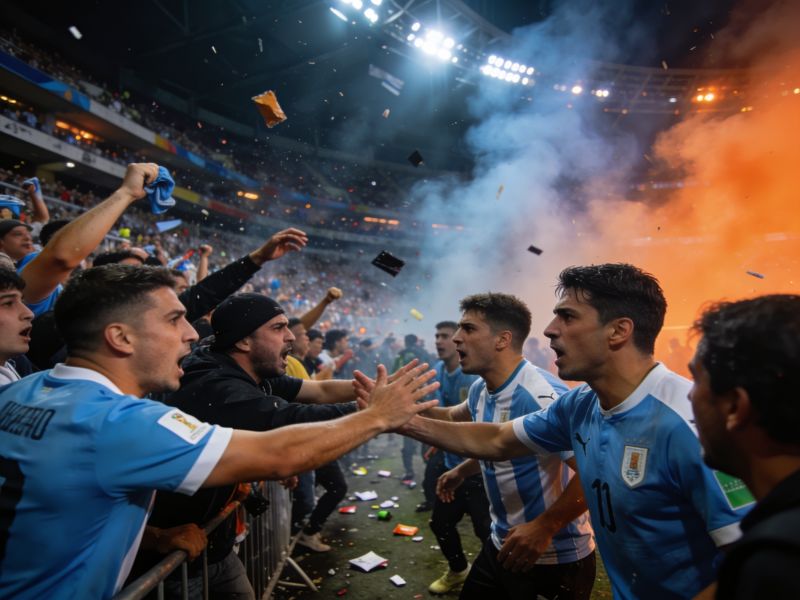
FIFA’s potential response could include lengthy player suspensions, financial penalties and sanctions against the Uruguayan Football Association. The exact punishment would depend on the evidence collected from match officials, security reports, broadcast footage and statements from the players involved. FIFA may also consider whether Uruguay officials failed to prevent the confrontation or whether the team’s conduct created a wider safety threat. A heavy suspension for Núñez would be particularly damaging. He is one of Uruguay’s most important attacking players, and his absence would affect World Cup qualifying matches as well as future international fixtures. Uruguay may face severe punishment from FIFA not because every player acted in the same way。but because disciplinary panels often examine the conduct of the group as a whole when a confrontation spreads rapidly.The case also exposes a familiar weakness in major football tournaments: the gap between passionate support and basic crowd protection. Families of players were seated close to opposing fans。and several Uruguay players said they felt there was no effective security response when the disturbance began. That claim may influence how FIFA views the episode, particularly if investigators determine that stadium personnel failed to separate rival supporters or respond quickly enough. Still, entering the stands creates its own set of problems. Players are not ordinary spectators;their actions carry authority, and a single shove or punch can trigger a larger incident. Uruguay may face severe punishment from FIFA even if the players believed they were protecting relatives, because international regulations place a high burden on teams to control their behavior in emotionally charged moments.South American football authorities have already treated the confrontation as a serious disciplinary matter, while FIFA’s involvement could widen the consequences beyond the tournament. Uruguay’s federation is expected to argue that its players acted under pressure and that the security operation failed before the team reacted. Prosecutors and football officials, however, will likely focus on individual responsibility rather than emotion alone. The most severe outcome would be multi-match bans for the players who entered the stands, additional fines for the federation and restrictions tied to future international games. A more limited ruling could reduce the penalties to suspensions and monetary sanctions, especially if investigators find that the players were responding to an immediate threat. Uruguay may face severe punishment from FIFA, but the final decision will turn on the evidence。
the disciplinary code and whether the panel believes the incident was an act of protection or an unacceptable escalation.
Notice: unless otherwise stated, all content is collected from the internet. If it infringes your rights, please contact us for removal.