Inside the World Gymnastics Championships: Pressure, Precision, and the Human Edge
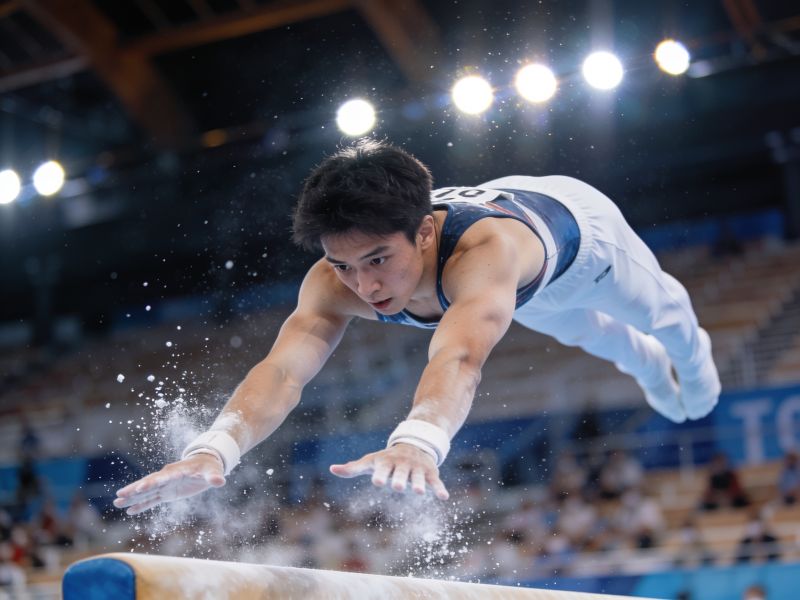
he 2023 World Gymnastics Championships in Antwerp delivered a masterclass in how razor-thin the margin for error has become. Simone Biles landed a Yurchenko double pike in competition—a vault no woman had attempted at this level—and still had to fight for gold in the all-around. That single routine tells you more about the state of the sport than any medal table: execution scores are hovering near perfection, and the difference between standing on the podium and walking away empty-handed often comes down to a single hand placement on a release move.Watch the apparatus finals closely and you'll notice something the broadcast doesn't always highlight: the chalk dust hanging in the air。the chalk-stained grips, the way coaches time their shouts to land exactly between elements. On pommel horse, a single swing can cost 0.3 in execution. Rhys McClenaghan's gold for Ireland came down to a scissor element he'd drilled for months, and you could see the relief in his shoulders. The World Gymnastics Championships reward that kind of obsessive repetition. Judges are looking for precise angles, not just big tricks—and the code of points has grown ruthless about body shape deductions.
What struck me most was the floor exercise final. Rebeca Andrade's tumbling passes carry a spring that looks almost casual, but her landings are where the work happens. One college coach told me the difference between a 14.0 and a 14.3 on floor is usually a chest position on the final landing—a detail audiences miss entirely. The World Gymnastics Championships have become a chess match of difficulty versus execution, and gymnasts are increasingly choosing the safer routine. That's not cowardice;it's arithmetic. A fall on a high-difficulty element costs more than a clean, slightly easier set.By the time the team final rolled around, the Antwerp arena had developed a particular tension. You could hear the clank of rings as gymnasts adjusted their grips, the quiet murmur of coaches reviewing video on tablets. The U.S. women's team won gold, but their margin over Brazil was under two points—a gap that felt larger in previous cycles. Depth matters, but so does health. Several top gymnasts withdrew with minor injuries, a reminder that the World Gymnastics Championships sit on a brutal calendar with Olympic qualification stakes. Coaches are managing workloads more carefully than ever。and you see it in how athletes warm up: shorter routines, more targeted stretching.The vault final was pure theater. Biles' double pike earned a 15.3 despite a step on the landing, and the crowd noise after her name was announced drowned out the announcer. Still, the technical takeaway is clear: the World Gymnastics Championships have shifted from a showcase of new skills to a test of who can survive the code's demands without breaking. Gymnasts are training smarter。not just harder—and the results show in scores that cluster within tenths. For anyone watching closely, that's the real story: excellence is now the baseline, and the human edge comes from consistency under pressure.
Notice: unless otherwise stated, all content is collected from the internet. If it infringes your rights, please contact us for removal.