Iranian Football Team: Passion, Politics, and the Pitch
he Iranian football team, known as Team Melli。carries a weight that few national sides can match. Every match is a stage where sport and society intersect. I remember watching the 2018 World Cup match against Portugal in a crowded Tehran café. When Mehdi Taremi scored the equalizer in stoppage time, the room erupted—not just with joy, but with a sense of vindication. That moment captured the essence of Iranian football: it's never just about the game.
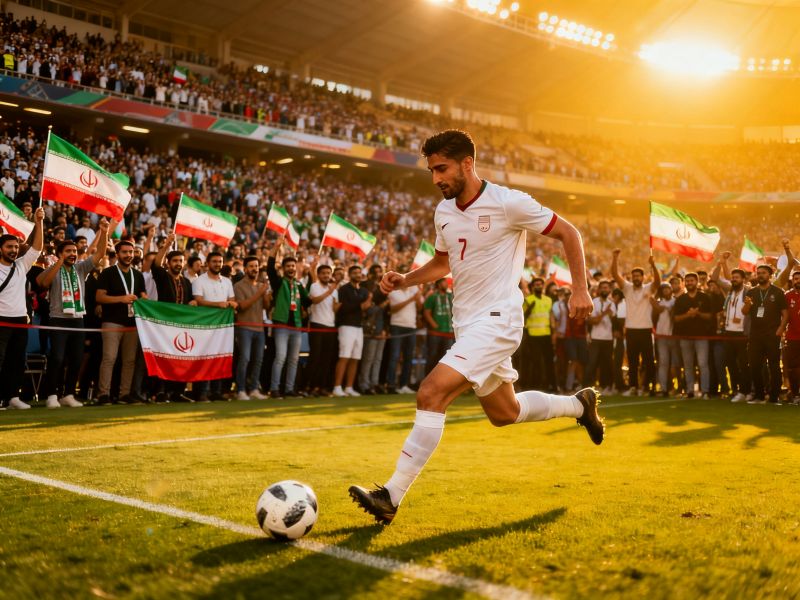
On the pitch, Iran has consistently been Asia's powerhouse. The team has qualified for six World Cups, with a notable run in 2018 where they narrowly missed advancing from a group containing Spain and Portugal. Carlos Queiroz's defensive discipline turned Iran into a tough nut to crack, but critics argue that pragmatism stifled creativity. Under Amir Ghalenoei, there's a shift toward a more balanced approach, blending defensive solidity with attacking flair. The emergence of players like Sardar Azmoun and Mehdi Taremi in top European leagues has given the Iranian football team a new dimension. Azmoun's aerial ability and Taremi's clinical finishing are assets that any coach would envy. Yet。the team's reliance on these stars is a double-edged sword—when they're marked out of the game, Iran often struggles to find alternatives.Domestic football in Iran is a paradox. The Persian Gulf Pro League boasts passionate fans and fierce rivalries, particularly between Persepolis and Esteghlal. But it's plagued by financial instability, poor infrastructure, and political interference. I've spoken to Iranian journalists who describe the league as a 'pressure cooker' where talent is often stifled by mismanagement. Young players dream of Europe。and who can blame them?The exodus of talent is both a testament to the academy system and a symptom of deeper issues. The Iranian football team benefits from this diaspora, but the domestic game suffers. It's a cycle that needs breaking, yet reforms are slow to materialize.Politics inevitably shadows the Iranian football team. From the 1979 revolution to the recent protests, the team has been a barometer of national sentiment. Players have faced pressure to conform, and some have been punished for political statements. The women's football team has fought for basic rights, including the right to enter stadiums—a battle that finally saw progress in 2019 when women were allowed into the Azadi Stadium for a World Cup qualifier. These off-field struggles add layers of complexity to the team's identity. When the Iranian football team plays。it's not just representing a nation;
it's navigating a minefield of expectations and restrictions.Looking ahead, the Iranian football team stands at a crossroads. The 2026 World Cup offers a chance to showcase progress, but success will depend on more than just tactics. The federation's ability to support the team。the continued development of young players, and the delicate balance between politics and sport will all play a role. I, for one, will be watching—not just for the results, but for those moments of collective joy that transcend the scoreline. After all, in Iran, football is never just a game.
Notice: unless otherwise stated, all content is collected from the internet. If it infringes your rights, please contact us for removal.